


At this point the potential of AI is obvious but how do you encourage a whole organization to adopt it?
It’s been difficult.
Power users are not the answer. You may be lucky and have a few already. They spent nights tinkering, built custom workflows, and now they’re unreasonably efficient at coding, research or whatever else they cared to automate. But they’re not necessarily going to teach everyone else.
You can shove AI into your product, but larger organizations are notoriously bad at innovating and there are complex product strategy challenges with rolling out AI products that I've written about before.
Even internal transformation projects are challenging to implement because the people who understand workflows aren’t AI-fluent.
Luckily, there’s one really practical way to accelerate AI adoption.
Install an Internal Slack Agent
Force all interactions with the Slack agent to happen in public channels. That’s it.
The first time I heard about this was from Georgios.
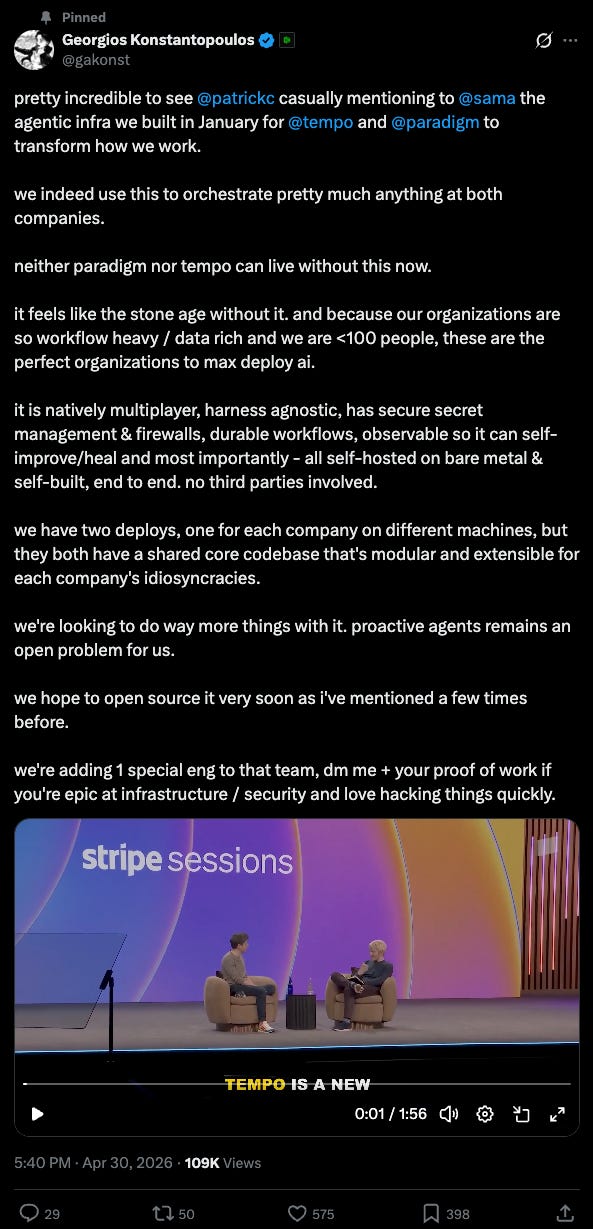
Patrick Collison even said he didn’t know how to apply it at Stripe.
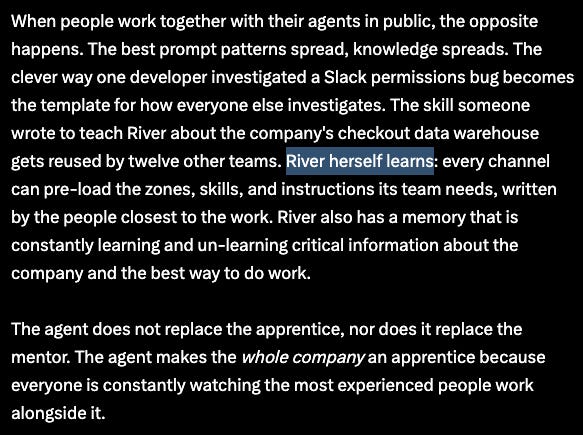
Then Tobi Lutke published Learning on the Shop Floor, an article connecting apprenticeship culture to Shopify’s internal agent, River. River is an agent you tag in Slack to complete work, but you can interact with it in any public channel but ONLY in public channels.
So why does this work?
It’s all about the CONTEXT
1/ Less setup for everyone
The immediate benefit is that you’re pooling the effort to interact with external systems and data. Not everyone has an Openclaw instance or knows how to use GitHub agentically. By routing it all through one company agent, people don’t have to learn each tool independently. They just talk to the agent, and it handles everything for them.
2/ Apprenticeship
But the deeper benefit is what Tobi calls apprenticeship. People in different departments don’t just know different AI tools, have identified best practices in using the tools. When an engineer creates a pull request through the Slack agent, someone in marketing might see it and figure out how to patch up website copy.
A public Slack agent makes AI use visible, demonstrates what’s possible through real work, and creates social pressure to participate. Every interaction someone has with the agent is a live tutorial for everyone else.
3/ Context farming
The third benefit is context farming. By making it easier to do work with the agent than without, you’re forcing employees to build, in real time, the company’s playbook. All work is documented. This can be used to formalize SoPs, identify bottlenecks, monitor which workflows produce better outcomes and make recommendations.
Tobi explained how River learns from prior interactions:
You can use this today
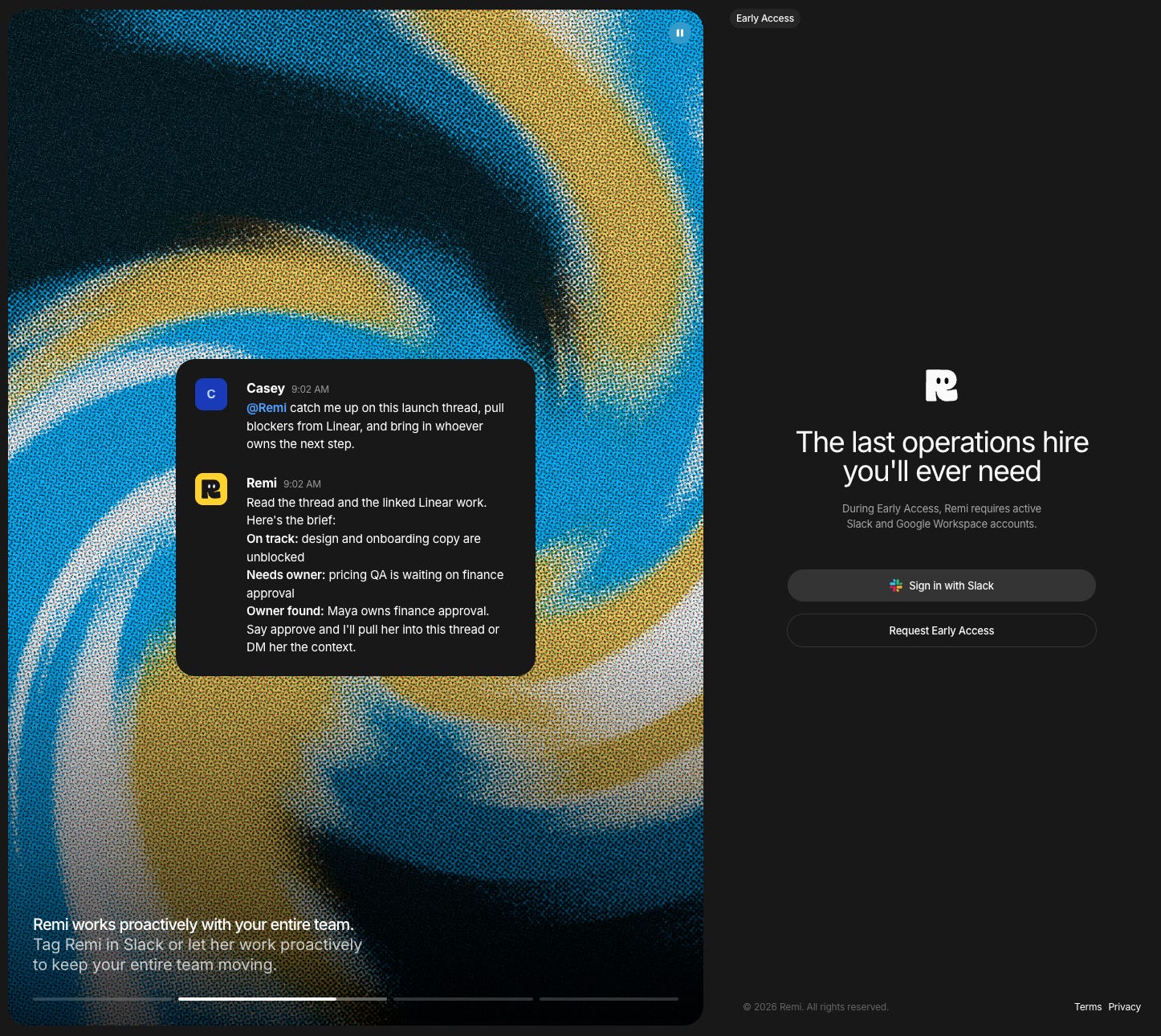
Entrepreneurs are jumping to offer this as a service. Remi is "an internal agent that learns from your team's processes. Stilla is literally positioning itself as Shopify’s River for everyone. There are probably more, but these are the ones I’ve naturally come across.
I expect this to be a hot market and another surface Claude and Codex will likely offer in the next 6 months.
One thing missing from today’s implementations is proactivity. Georgios talked about how they’ve struggled to build proactivity in their agents. Proactive agents wouldn't just respond to prompts, they would notice a bug on your website and propose a fix or notice a vendor offering a cheaper plan and downgrade, etc.
Possibilities aside, if you’re looking for a single, high-leverage step to accelerate AI adoption across your organization, this is the one I’d make today.