

I recently talked to a PE-backed company where the engineers use Claude Code but support tickets take multiple days to be answered.
At first glance, these are two unrelated concepts but I realized customer support is a lot like coding (even easier in many ways).
The customer has a job they are trying to do and a problem that is preventing them from doing that job.
The role of customer support is to investigate, make a plan for how the customer should best solve the problem, implement any required changes on the product side and then help the customer execute the plan.
Sometimes, the plan can be quite complex, for example, when a customer is building an integration to your software.
Other times, the customer is simply doing the wrong thing and all you need is education.
If customer support is a lot like coding, why not use Claude Code?
My idea is simple, lets equip the customer support agent with Claude Code. Claude will draft the support responses and the agent will be responsible for communicating the final response to the customer. Learnings will be captured in markdown files to benefit future sessions.
Welcome to customer-support
I did exactly this and created a plugin called customer-support to test the concept. It has 4 skills:
cs-initialize
cs-answer
cs-interactive
cs-resolve
To use it, you start by creating an empty support repository and running cs-initialize, it’ll ask you various questions such as the intended tone & voice of your support answers.
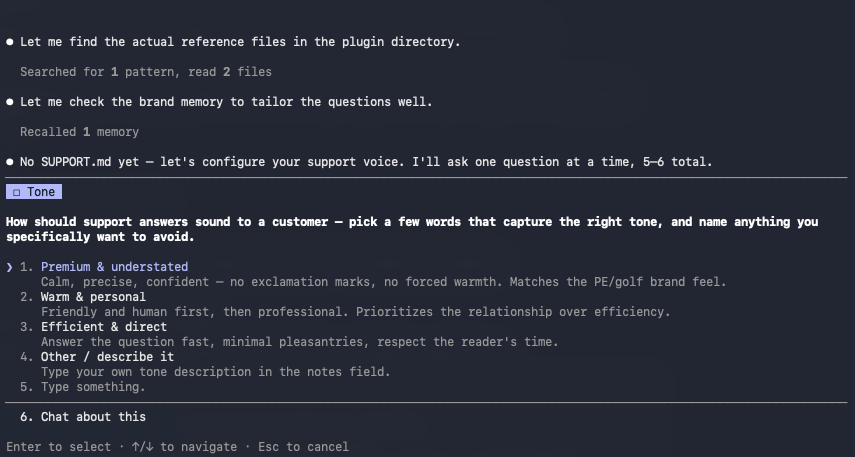
For this example, we’ll create a support agent and test it with random StackOverflow questions so efficient & direct will work best.
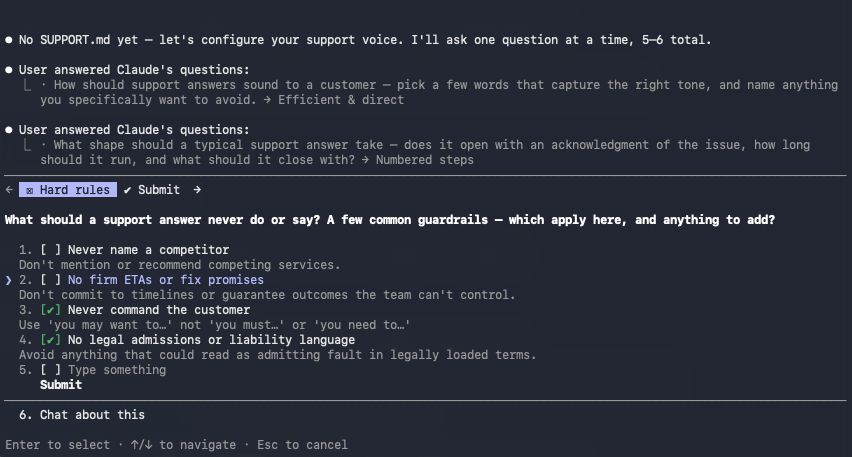
It’s pretty considerate of your support requirements, see faux pas:
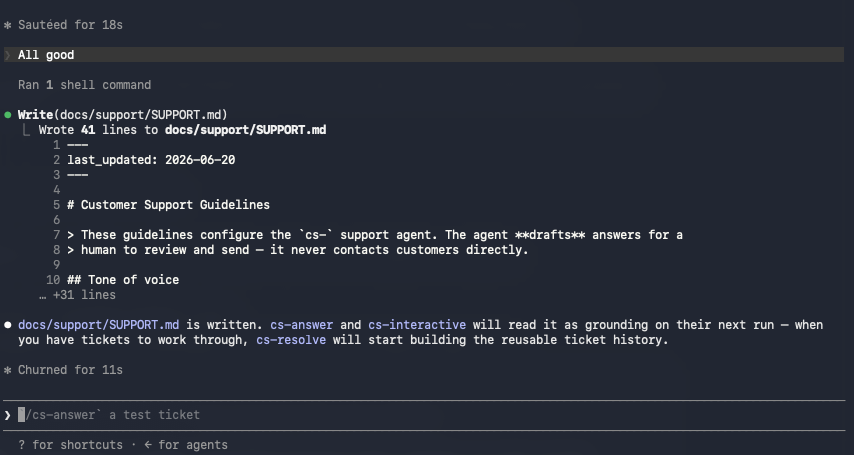
After some questioning it creates a SUPPORT.md file with your support configuration:
Now for the fun part. Lets find a complex question on StackOverflow and see what we can do.
I know nothing about Webkit so this is perfect:
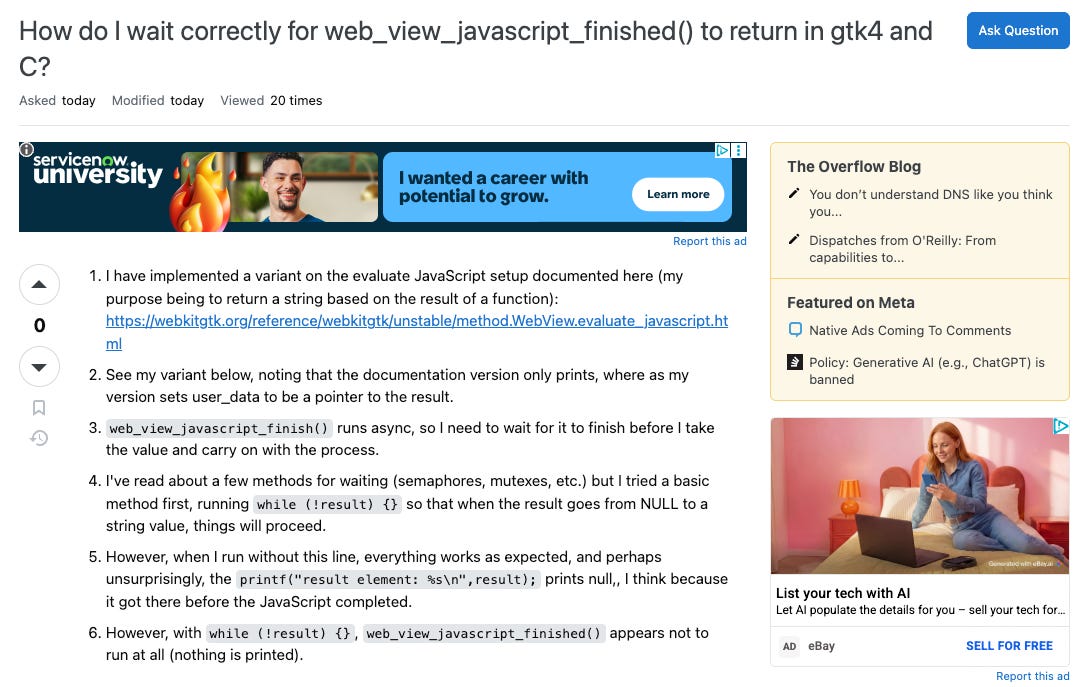
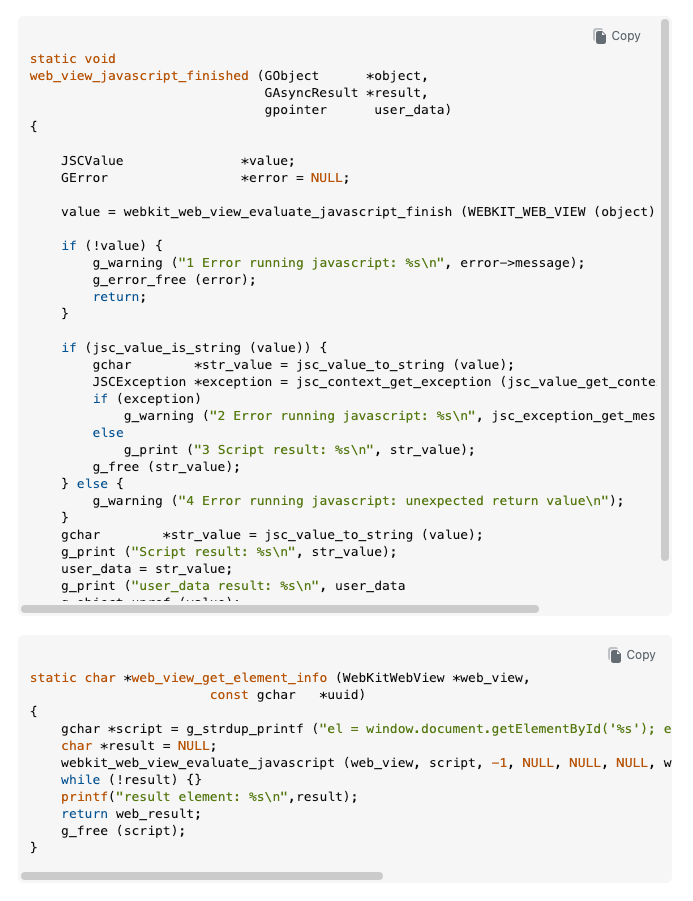
How long would it take you to answer this?
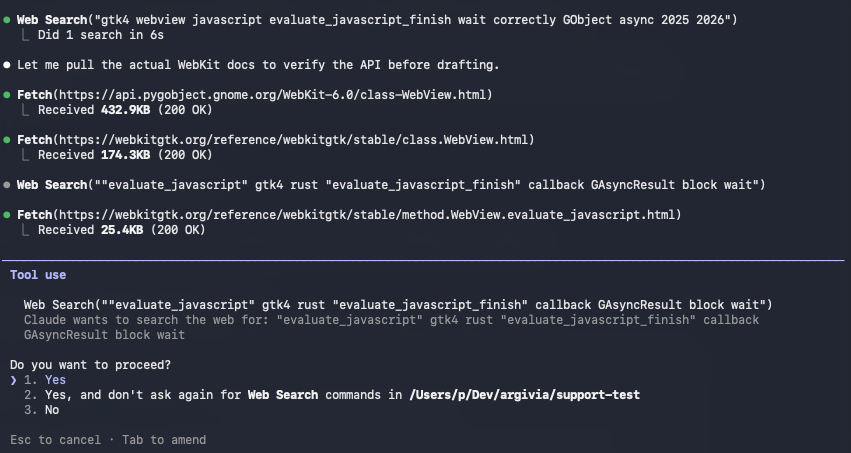
Claude also knows nothing about WebKit but it knows how to read docs so I think it can get there pretty quickly.
I type cs-answer and share the StackOverflow question (I could also use cs-interactive but I think Claude has enough context here).
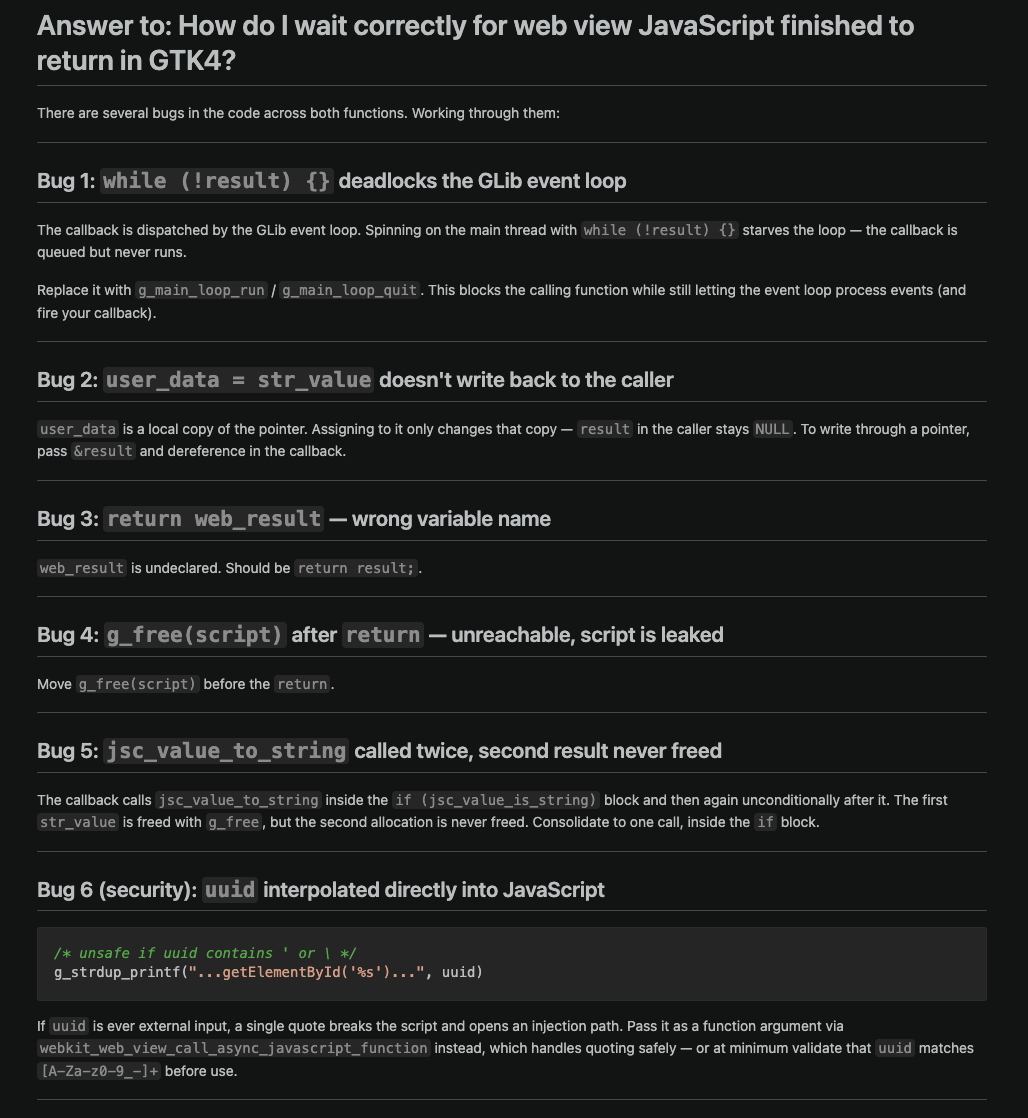
From there, the support agent writes a response.
Now when I run cs-resolve, it persists the answer into a (markdown) ticket that can be referenced in further sessions.
The ticket starts with a detailed searchable front matter:
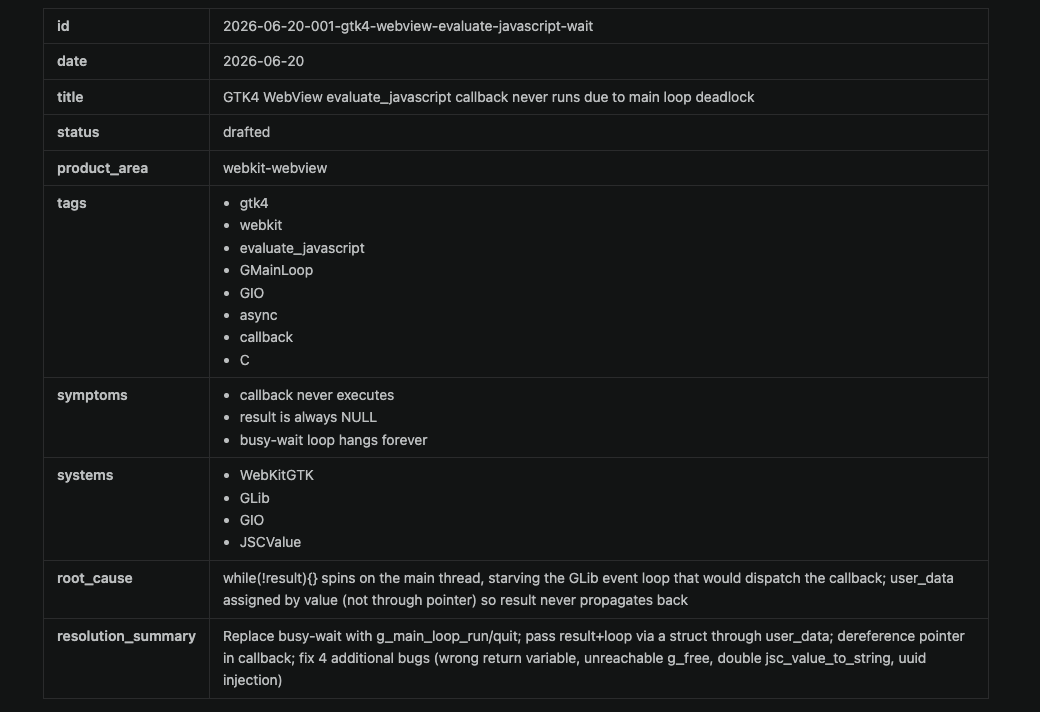
It is followed by the original prompt and answer as well as some learnings for future support sessions:
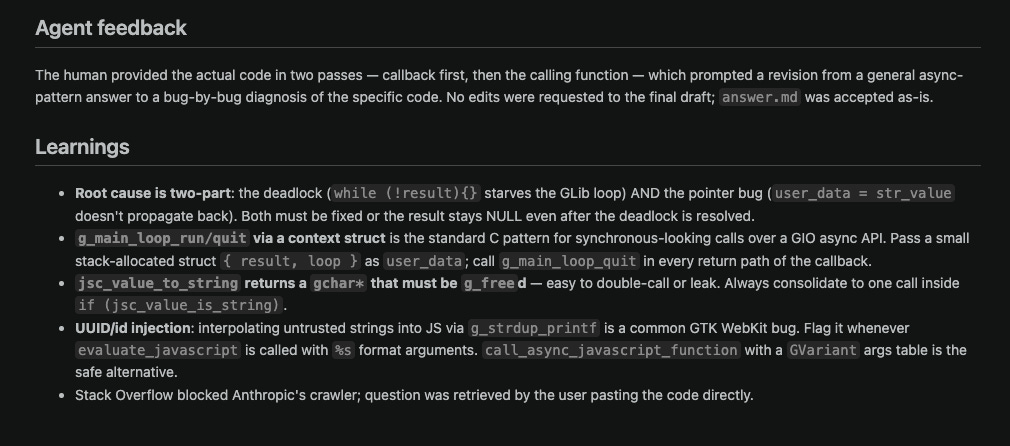
Related answer sessions in the future would have access to this ticket and could now use it to speed up resolution.
What universality means
Note that I didn't need to create a “WebKit” agent.
The customer support agent is only personalized in how it answers questions but the knowledge is universal.
In principle you don't need anything else, a repo with the cs- skills installed could run as a very basic ticketing system.
What if I have existing tickets?
The agent maintains a tickets/folder with resolutions. You could import existing tickets and resolutions into the tickets folder by translating them into markdown files to be picked up in future runs.
Alternatively you can provide a skill/tool for querying an existing ticket database.
What if I have custom software?
If your customers are using custom software that requires additional access for debugging, you could create a read-only API, wrap it into a CLI and provide the customer support agent with access.
How do I inject custom knowledge?
Whether you have existing playbooks or documentation, you could just add them as Claude skills. Claude will pick up relevant skills and inject them in context anyways so there’s no need to import/integrate that directly into the support agent.
Of course there’s lots to improve here but for a project that I one shot on a Saturday afternoon it’s an immediately useful blueprint.
What if I want this agent to upsell/get feedback/etc.
All the skills are easy to customize or you could put a CLAUDE.md file in the support repo root as well. This isn't a fixed solution.
Fully automated support is a trap
So why don't people do this more often?
I think AI for support has been sold as an all-or-nothing implementation. Either trust AI fully and use AI chatbots as an interface to your customers or stay away from it. Either camp is pretty vocal about their approach being superior.
In reality, it’s exactly this kind of hybrid setup that can deliver the best quality and speed.
It can leverage AI and still preserve the type of feedback/sales opportunities that arise from great customer service and direct customer relationships.