

As summer wraps up there is a number of projects we are getting through at record pace (with a little help from AI, did you watch the podcast yet?). The most recent one was rebuilding our website. Will leave the what and when for later but there were a fair number of learnings in the how that are worth sharing.
The bottom line is that front-end development is maybe as fun as it ever will be?? Taking an idea and turning it into JS that you don't even have to review has never been easier. But if you just do that you’ll end up with a very-obviously-AI-generated website.
These websites aren't necessarily bad. Go back in time and show an AI-generated website to someone in 2024 and they will likely be impressed. The problem is that they all look the same now.
To avoid that, we did the following:
1/ Start with a clear strategy.
2/ Split the process into granular steps and review/edit each step thoroughly.
3/ Use AI to explore large amounts of variations quickly.
4/ Write the copy.
START WITH A CLEAR STRATEGY
AI amplifies quality decision-making. If you have a unique and differentiated strategy, everything you produce with AI will be less replicable. Most “invisible” AI use on the internet leverages this.
But you should also try to avoid AI's help here for similar reasons. Brainstorm with other humans, go to a museum, take a walk outside.
I recently walked the Line in London again with my son. It gave me more peace and ideas than an ideation session with Claude.
One thing to think about is that brand, distribution and product strategy is merging so designing a website should not be an after-thought, it can be a core deliverable to conceptualize your brand/product. You should definitely consider what the function of the website is in the marketing pipeline and the sales pipeline and build backwards from that.
SPLIT THE PROCESS INTO GRANULAR STEPS
AI should allow you to have a more robust process, not a leaner one. Even if you have 1-2 people building the website, you could pretend that you have a 5-person agency team working on it. Build personas, sitemaps, color palettes, style scapes and so on.
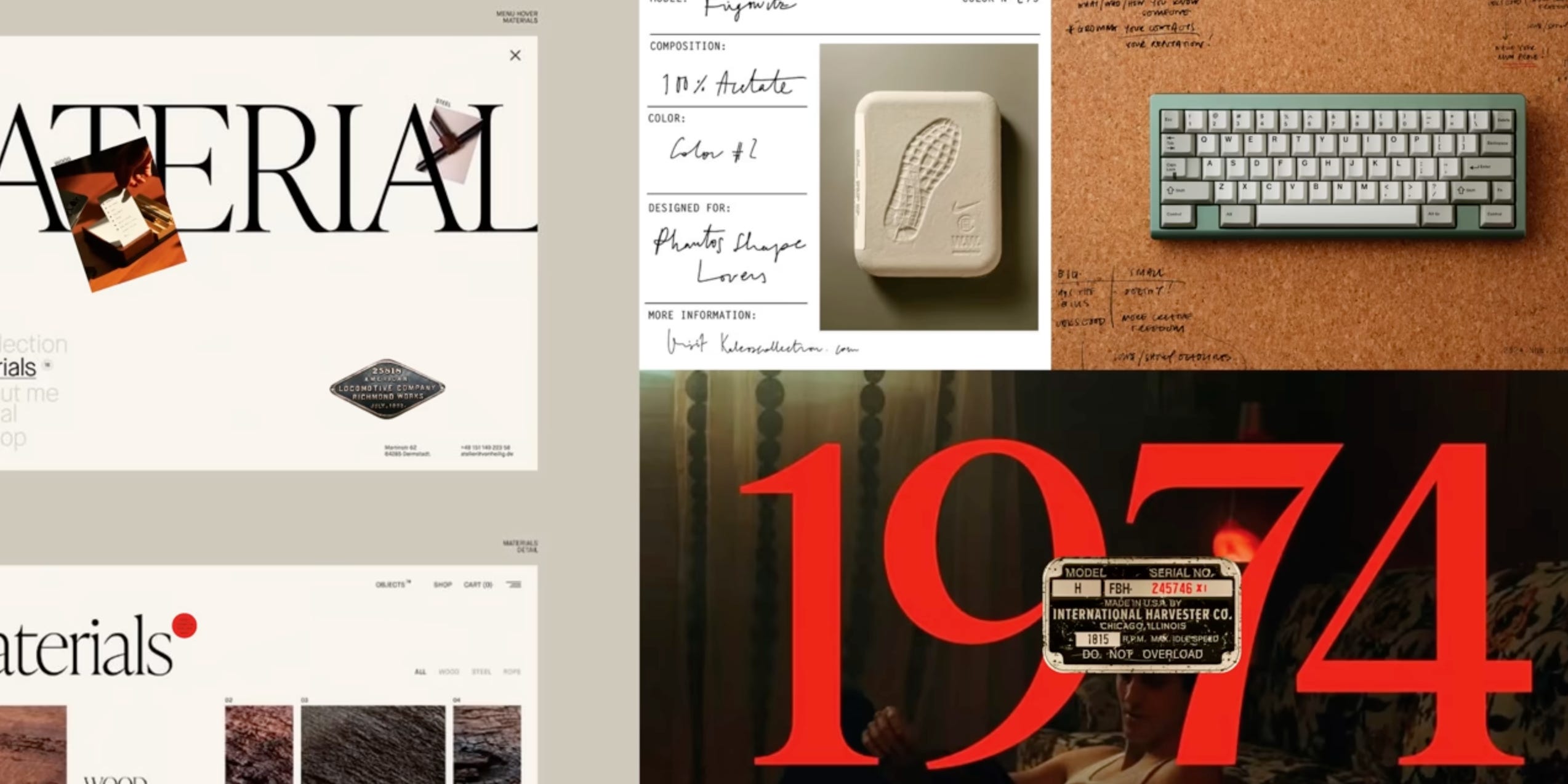
Matthew Encina's Building a Brand video is a great place to start if you want something not too heavy that considers all the product and commercial aspects as well.
AI use here is up to you. You can use AI to generate personas, do color math to fill out your palette, help discover fonts, etc. I did it for all the above and it not only helped get better results, it helped me flow through the process.
When building the website itself, I did it section by section (it is a one-page website), not all at once. The more time you have to engage in the process, the more discrete “stops” you will want to create for pausing. Reviewing outputs and sections just made sense to me and models perform very well at a section granularity.
USE AI TO EXPLORE VARIATIONS
A key way to use AI in this process is to explore variations. My typical workflow for creating each section was to sketch some ideas on paper, have Claude build them and generate a couple more.
From there I would select the best one and create a bunch of sliders or minor variations to control various parameters like sizing, spacing and colors. This is nothing new of course.
It would be unreasonable to ask a team member to ask for 8 variations of doing the same thing so we don't have this habit but it's a good way to brainstorm with AI while still being the decision maker.
WRITE THE COPY
My final bit of advice is don't let AI write a single line of copy, no exceptions.
Struggling through the copywriting is a process which is valuable in its own right and honestly it is easier to just do it directly than to provide AI with sufficient context to do it well.
For us, during an SEO-checklist audit, Claude snuck in and wrote our page title and metadata bits and even that I wasn't happy with and had to rewrite.
Another thing we tried was to use AI-generated images and even video and eventually just gave up. I think AI-generated media will tend to look dated rather quickly and it’s very hard to make it look good in the first place. Although some people can.
If the strategy and words are yours, you’re more likely to end up with something good in the end.